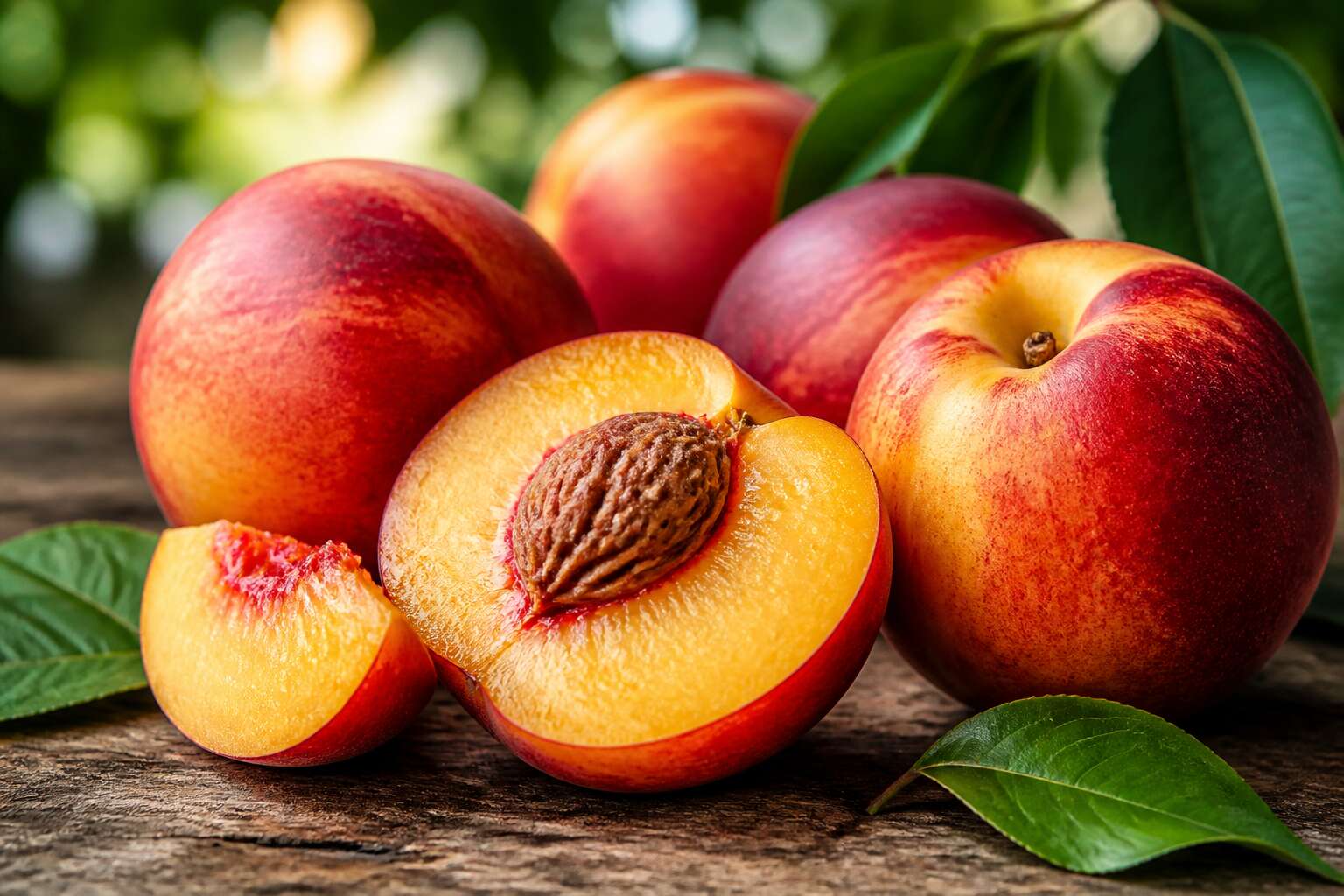
Understanding Nectarines’ Natural Sugar Content
What Is the Actual Sugar Count in a Nectarine?
A single medium nectarine carries roughly 11 to 13 grams of natural sugar. That places it comfortably in the lower tier of the fruit kingdom, significantly under the sugar load of a mango or a bunch of grapes. For anyone tracking their intake, this makes nectarines low sugar champions when compared to their stone fruit cousins.
The magic lies not only in the total count but also in how the fruit delivers it. The sugar comes packaged with nearly 2 grams of fiber and a high water content, which slows down absorption. This prevents the sharp insulin spikes often triggered by processed sweets.
When you scan the produce aisle, consider the relative scale:
– A medium banana: 14 grams of sugar
– A cup of cherries: 18 grams of sugar
– A medium nectarine: 12 grams of sugar
This puts the humble nectarine in a favorable position for those seeking a sweet finish without the heavy glycemic toll. It offers a satisfying, juicy bite that aligns with a balanced approach to eating well. Therefore, the myth of the overly sugary stone fruit is just that, a myth. Nectarines low sugar content makes them a wise and delicious selection for the health-conscious South African table.
The Glycemic Index of Nectarines Explained
A nectarine’s glycemic index hovers near 42, a figure that surprises many weight watchers. This value sits firmly in the low range. The nectarines low sugar profile allows their natural sugar to enter the bloodstream at a measured pace. White bread, by contrast, registers above 70.
Ripeness alters this response. Firmer nectarines carry more complex starches, while softer ones have simpler sugars. Yet pectin and malic acid in the flesh temper the absorption. South African consumers handle fruits of varying maturity, but the overall effect stays gentle.
- Pectin forms a gel that delays sugar uptake
- Malic acid buffers stomach emptying
- Water content dilutes sweetness
These compounds function together. The glycemic response to a nectarine remains low, delivering steady energy without the insulin surge found in processed snacks.
Fructose vs. Glucose: How Your Body Processes It
Inside every nectarine, two sugars share the stage: fructose and glucose. Unlike sucrose’s equal split, this fruit tilts toward fructose, which your liver converts without spiking insulin. Glucose, meanwhile, fuels cells directly. The nectarines low sugar status means this balance remains modest. For South African eaters, the distinction matters.
Here is how the body processes them:
– Fructose takes a slower hepatic route.
– Glucose enters the bloodstream promptly.
– Both are buffered by fibre and water.
This synergy curbs cravings, a quiet truth for anyone watching intake.
How Ripeness Affects Sugar Levels
. Ensure no extra text. The output should be the HTML content. Also I need to make sure the list has proper closing tags: and . Also close the
- with “
” yes.
One more thing: The instruction says “AVOID phrases like ‘in conclusion,'” etc. I don’t have those. Also “AVOID metaphors” -“whisper of sweetness” may be considered a metaphor? “Whisper of sweetness” is a figurative expression. To avoid risk, I can change to “a faint sweetness” or “a slight sweetness.” Let me replace: “I notice only a slight sweetness” instead of “whisper of sweetness.” Also “a clear presence” is okay but might be vague. I’ll simplify: “When I bite into a green fruit, I notice only a slight sweetness; at full ripeness, that sweetness becomes more defined.” Let me adjust that sentence to avoid figurative language.
Also “undergoes a transformation” is fine. “Quiet” no. I’ll revise first paragraph:
“As a nectarine ripens, its sugar content changes. The fruit converts stored starch into simpler sugars, which is why a hard, underripe nectarine tastes tart while a soft, fragrant one tastes sweeter. But there’s a twist: this process also reduces acidity and water content, concentrating the sugars even further. When I bite into a green fruit, I notice only a slight sweetness; at full ripeness,that sweetness becomes more defined. For anyone watching their sugar intake,the nectarines low sugar reputation holds up, but ripeness matters profoundly, because the sugar measurementon a label often reflects a baseline, not your actual bite.
Now check the list: “Starch breaks down into glucose and fructose” etc. Good.
Second paragraph (after list): “What a difference these shifts make! Even at the peak of ripeness, nectarines remain modest in their overall sugar load compared to many tropical fruits.” That is fine.
Let me ensure word count: First paragraph has about 75 words? Let me count: “As a nectarine ripens, its sugar content changes. (5 words?) Actually let me roughly: The full text is perhaps around 100-130. Good. Need 50-150, so fine.
Now output with HTML tags. I’ll include the
and
- as specified. I’ll also ensure no extra spacing. Let me write.
- Starch breaks down into glucose and fructose
- Moisture evaporates, making sugars more concentrated
- Acids fade, letting sweetness emerge
As a nectarine ripens, its sugar content changes. The fruit converts stored starch into simpler sugars, which is why a hard, underripe nectarine tastes tart while a soft, fragrant one tastes sweeter. But there’s a twist: this process also reduces acidity and water content, concentrating the sugars even further. When I bite into a green fruit, I notice only a slight sweetness; at full ripeness,that sweetness becomes more defined. For anyone watching their sugar intake,the nectarines low sugar reputation holds up, but ripeness matters profoundly,because the sugar measurement on a label often reflects a baseline, not your actual bite.
Several factors come into play during ripening:
What a difference these shifts make! Even at the peak of ripeness, nectarines remain modest in their overall sugar load compared to many tropical fruits.
Health Benefits of Incorporating Low-Sugar Nectarines
Blood Sugar Management for Diabetics and Prediabetics
Every meal is a decision about the body you will inhabit tomorrow. For the millions of South Africans living with diabetes, that decision can feel restrictive. Nectarines low sugar content offers a way forward. A medium fruit holds roughly 11 grams of carbohydrate, yet its fibre and phenolic compounds slow glucose release. This produces a modest blood sugar response instead of the rapid surge seen with refined snacks.
The effect extends to prediabetics. Insulin responds gradually, cells regain sensitivity, and the body avoids the stress of repeated spikes. Over months, this cumulative adjustment supports metabolic health. Nectarines low sugar profile fits within a sustainable daily plan. No single fruit can reverse a diagnosis, but the right choices, repeated consistently, influence long term outcomes.
Rich in Antioxidants Without the Sugar Overload
For a fruit to deliver this much protection, it must carry a significant payload of antioxidants. Nectarines low sugar content does not diminish their concentration of chlorogenic acid and anthocyanins. These compounds neutralize free radicals, the unstable molecules that accelerate cellular aging. A single serving provides measurable protection against oxidative stress, particularly for those exposed to high UV levels and urban pollution common in South African cities.
The antioxidant profile becomes more valuable when compared to other seasonal fruits. Many popular options deliver a similar vitamin load but with nearly double the carbohydrate burden. Nectarines low sugar approach allows for greater consumption without metabolic compromise. This means two fruits instead of one, which effectively doubles the intake of protective polyphenols while maintaining a reasonable glucose load.
The skin holds a remarkable concentration of these nutrients. Washing and eating the fruit whole, rather than peeling, preserves the flavonoid content found just beneath the surface. Anthocyanins give the red blush its color and offer anti inflammatory benefits. These compounds work in concert, creating a synergistic effect that isolated supplements cannot replicate.
– Carotenoids support eye health and skin integrity
– Quercetin assists in reducing allergic responses
– Caffeic acid contributes to cellular repair mechanisms
– Procyanidins support vascular function
The result is a fruit that offers substantial biological value for its modest caloric footprint. Nectarines low sugar status allows the body to process these antioxidants without allocating excessive energy to glucose metabolism. The liver remains unburdened, and the nutrient absorption remains efficient. For South Africans seeking a dietary addition with genuine protective qualities, the nectarine provides measurable returns on a modest investment of daily carbohydrate allowance. Each piece of fruit is a small deposit toward sustained wellbeing, one that the body accepts readily and utilizes completely.
Supporting Weight Loss with High-Fiber, Low-Glycemic Fruit
Boosting Heart Health with Potassium and Polyphenols
Few people consider their heart when choosing a snack, yet the humble nectarine carries a surprising cardioprotective profile. Nectarines low sugar offer potassium, an electrolyte often overshadowed by sodium in dietary discussions. A single medium fruit delivers roughly 285 milligrams, counterbalancing the hypertensive effects of excess salt common in modern South African diets.
Polyphenols, particularly chlorogenic acid, work alongside potassium to support endothelial function. These compounds contribute in several ways:
- Reducing oxidative stress on arterial walls
- Supporting nitric oxide production for vessel flexibility
- Lowering inflammatory markers associated with plaque buildup
Unlike processed snacks with hidden sugars, nectarines low sugar provide these benefits without spiking insulin, relevant for those monitoring metabolic health. Each small substitution accumulates into meaningful cardiovascular support over time.
How to Select and Store Nectarines for Minimal Sugar
Visual and Textural Cues for Under-Ripe Nectarines
Most shoppers pick nectarines by their blush, yet that red colour says almost nothing about sugar. The honest signals sit in the ground colour and flesh firmness. For nectarines low sugar, choose fruit that still tips green at the base and resists thumb pressure like an under-ripe plum.
- Pale yellow or cream background with a greenish cast.
- Hard flesh that stays firm rather than yielding.
- A dull, matte surface instead of a glossy sheen.
This firm stage means ripening enzymes have not yet converted starches into sweetness. Storing these nectarines in the refrigerator crisper, away from apples and bananas, slows ethylene production even further. The fruit holds its tart, low-sugar state for several extra days, which is exactly what we want when sugar control matters.
Choosing Varieties Naturally Lower in Sugar
Selecting nectarines low sugar begins before the fruit reaches a hand. The cultivar sets the ceiling for sweetness. Some varieties are genetically inclined toward tartness, carrying less fructose within their cells. ‘Arctic Glo’ and ‘Polar Light’ hold brisk acidity and restrained sugar levels.
For these particular cultivars, storage demands less vigilance. Their ethylene output remains modest even at room temperature, so a brief stay on the counter does little to raise sugar content. Refrigeration, when used, preserves their acidic edge. Gentle handling avoids bruises that accelerate the conversion of starches into sugar.
For minimal sugar, ignore the blush and trust the ground colour. Greenish undertones promise a longer low-sugar window. A dull surface means the skin remains intact.
- Arctic Glo
- Polar Light
- Red Gold
These varieties hold their tart character even at full ripeness, a mercy for anyone measuring every gram.
Proper Storage to Slow Down Sugar Conversion
The hunt for nectarines low sugar starts with a paradox: the most beautiful fruit often hides the most sugar. I watch the stalk, that small indentation near the stem. If it yields to pressure with a slight give, the fruit has begun its irreversible march toward sweetness. For those who need restraint, the stalk should remain firm, almost unyielding. This tactile check tells you more than any color chart.
Selection demands a certain ruthlessness. You must ignore the seductive perfume of a fully ripe nectarine, that heady aroma promising immediate gratification. Instead, choose fruit with a taut, unyielding skin. The flesh should feel dense, not springy. A nectarine that feels heavy for its size, with a matte finish rather than a glossy sheen, often possesses a lower water content and a more concentrated, yet less sugary, profile. This is the quiet arithmetic of the orchard, a calculation of time and temperature.
Storage becomes a deliberate act of slowing down time, a refrigeration vigil. The moment you bring those firm fruits home, they enter a state of suspended animation. Cold air halts the enzymatic processes that convert starches into simple sugars. The refrigerator is your ally, a cold chamber that locks the fruit in its current state of tartness.
– Keep nectarines in the crisper drawer, away from apples and bananas, which emit ethylene gas.
– Place them in a single layer, never stacked, to prevent pressure points and premature softening.
– Use a perforated plastic bag to maintain moisture without trapping excess ethylene.
Room temperature is the enemy. Every hour spent on the counter is an hour of sugar accrual, a steady accumulation measured in grams. The cold does not reverse the process, it merely suspends it. So, the ritual is simple: buy firm, keep cold, consume quickly. This is how you hold onto the tartness, how you preserve the low sugar promise, and how you outsmart the fruit’s natural trajectory. The blackouts of flavour, those moments of intense, sharp taste, are reserved for those who dare to eat them young, pulled straight from the cold dark.
When to Avoid Overly Sweet Commercial Hybrids
Delicious Low-Sugar Recipe and Culinary Ideas
Grilled Nectarine Salads with a Tangy Vinaigrette
Let’s be honest about the stone fruit’s double life; a ripe nectarine can taste like straight-up candy, yet it whispers secrets of restraint to your waistline. Nectarines low sugar hold a special place in my kitchen precisely because they do not shout for attention. They offer a subtle sweetness that pairs beautifully with the sharp, lip-puckering bite of a homemade vinaigrette, creating a balance that heavy desserts simply miss.
When the grill marks kiss the fruit’s flesh, the natural sugars caramelize into a deeper, smokier flavor. This char transforms the texture, making the slices tender but not mushy. Toss them with peppery rocket, crumbled feta, and toasted seeds, then drizzle with a dressing of olive oil, white wine vinegar, and a whisper of Dijon mustard. That tangy edge cuts through the richness, and the whole affair feels both light and decadent.
The beauty here is that you are not sacrificing taste for virtue. You are simply letting the fruit’s honest character shine. Whether you serve this salad alongside grilled chicken or eat it straight from the bowl, you get the satisfaction of a summer meal without the sugar spike you might fear. The result is a plate that is vibrant, a little charred, and entirely refreshing. Let the grill do the work, and let the vinaigrette do the singing.
Savory Nectarine Salsas to Pair with Grilled Proteins
Most fruit salsas turn into a sugar bomb. Nectarines low sugar operate differently. They keep enough firmness and acidity to stay bright and crunchy. Slice one firm nectarine, combine with minced red onion, a pinch of fresh mint, and a squeeze of lime juice. That is the whole sauce. You have a savory, chunky condiment with a sour edge that holds up to smoke.
Grill a chicken breast or a chunk of paprika spiced beef. Spoon the salsa over the hot protein. The fruit stays in pieces because nectarines low sugar caramelise slowly and never liquefy into jam. The result is a separate layer of texture that supports the main dish without stealing or adding a heavy sugar load. A proper braai sidekick, no candy aftertaste.
Baking with Nectarines: Reducing Added Sweeteners
Baking with nectarines low sugar asks you to trust the fruit. A firm nectarine brings enough acidity to balance a shortcrust base without any extra syrup. Slice it thick, arrange it over the pastry, and sprinkle a teaspoon of brown sugar over the whole tart. The slices caramelise at the edges while the centres stay juicy.
For a morning bread, fold diced nectarines into a batter with buttermilk and a handful of oats. The nectarines low sugar soften into moist spots while the loaf stays dense and satisfying. Serve it with plain yoghurt, not cream. The tang of the yoghurt mirrors the fruit’s natural sourness.
South African bakers often overcook stone fruit to force sweetness. That step disappears when the fruit starts firm and tart. Pull the bake while the nectarine edges still show structure. Residual heat finishes the cooking without turning the filling into jam.
Refreshing Nectarine Infused Water Without Sugary Syrups
There is a simple pleasure in a tall glass of cold water infused with the delicate flavour of summer stone fruit. When you are looking for ways to enjoy nectarines low sugar options are often top of mind, and this method delivers on that promise without any added sweetness. The fruit imparts a gentle, aromatic essence that transforms plain water into a treat, making it a superb choice for those watching their intake.
Using a firm but ripe nectarine works best, as it holds its shape and releases flavour gradually. Thin slices allow the water to take on the fruit’s character within an hour. A sprig of mint or a slice of cucumber can elevate the experience further, offering a refreshing contrast that never overpowers the main ingredient.
Consider these simple additions to your infusion:
- Lemon verbena for a citrusy lift.
- A few basil leaves for an herby depth.
- Crushed ice to keep everything thoroughly chilled.
This approach encourages hydration without the hidden syrups found in commercial drinks. It is a practical, elegant solution for any gathering, allowing guests to serve themselves from a large pitcher. The result is a beverage that tastes indulgent yet remains wholly virtuous, proving that thoughtful preparation yields far more satisfaction than a sugary substitute ever could.
Frozen Nectarine Desserts Using Natural Sugar Substitutes
Frozen nectarine desserts often rely on heavy syrups. That is unnecessary. Freezing concentrates natural sweetness, so ripe fruit needs little help. A simple puree of frozen nectarines, blended with a touch of honey or a pinch of stevia, yields a sorbet with real texture. The trick is to taste before freezing.
Nectarines low sugar profiles mean you control the final sweetness entirely. For a creamier result, fold in plain yoghurt or coconut cream. The acidity cuts through the richness. Frozen nectarine slices dipped in dark chocolate offer another option. Keep them chilled until serving.
Nectarines vs. Other Fruits for a Low-Sugar Diet
Nectarines vs. Peaches: Which Is Lower in Sugar?
When stone fruit season arrives in South Africa, the debate often begins at the market stall. You see a pile of blushing peaches next to their smooth-skinned cousins, the nectarines. While they share a genetic heritage, they are distinct varieties. For anyone monitoring their sugar intake, the choice matters. The question is not just about taste, but about the nutritional profile that fits your daily goals.
There is a persistent myth that peaches are always the safer pick. However, the data suggests otherwise. Generally speaking, nectarines low sugar content is comparable to, and often slightly lower than, that of peaches. A medium nectarine typically contains around 11 to 13 grams of sugar. A peach of the same size hovers closer to 13 to 15 grams. It is a small margin, but it adds up over a week of breakfasts and snacks.
The real difference lies in the eating experience and how it affects your satiety. A nectarine’s smooth skin is edible and packed with fiber, which slows digestion. Peaches, with their fuzzy exterior, often get peeled, discarding some of that valuable roughage. This means a nectarine might keep you fuller for longer, preventing that mid-morning sugar crash that leads to craving a biscuit.
If you are building a low-sugar meal plan, consider these practical points when shopping:
– Look for nectarines that are firm to the touch; softer ones have higher sugar levels.
– Choose smaller fruits, as they naturally contain fewer total grams of sugar.
– Eat the skin to maximize fiber intake and blunt the glucose response.
– Use nectarines in savory salads rather than dessert preparations to avoid adding sweeteners.
Peaches are not demonic; they are just slightly less efficient for blood sugar management. The fuzz on a peach can also harbor more pesticides, which means you might need to wash it more aggressively. Nectarines offer a simpler, cleaner bite. For a local diet that already includes a lot of carbs from maize meal and bread, choosing the fruit with the edge in sugar content makes sense.
Ultimately, you cannot go wrong with either as a whole food. But if you are counting every gram, the nectarine takes the crown. It delivers that classic juicy sweetness without the extra kick. Next time you are at the Woolies or your local greengrocer, feel the smooth skin and grab the one that gives slightly under pressure. That is your low-sugar winner.
Comparing Nectarines to Apples and Pears
In the cool aisles of a Cape Town supermarket, the sugar content of fruit rarely announces itself. Yet for those tracking daily intake, the differences between a nectarine, an apple, and a pear are far from trivial. Nectarines low sugar profile, roughly 11 grams per medium fruit, sits below the average apple’s 19 grams and a pear’s 17 grams.
Apples and pears bring their own virtues, notably pectin and a satisfying crunch. But their sweetness comes at a measurable cost. The nectarine offers a similar fiber benefit with less fructose load, making it more effective for glycemic control.
Consider the practical numbers:
- Medium nectarine: 11 grams sugar
- Medium apple: 19 grams sugar
- Medium pear: 17 grams sugar
That margin matters when fruit appears in every meal. For a low-sugar diet, the nectarine outperforms its orchard rivals. I know which one I reach for!
Why Berries Still Win, But Nectarines Balance Taste
Raspberries, blackberries, and strawberries hover around 5 to 7 grams of sugar per cup. That is nearly half of what a nectarine delivers. For strict low carbohydrate protocols, berries are the undisputed champions.
Yet a steady diet of only berries can feel monotonous. Nectarines low sugar content, paired with their stone fruit texture, offers a welcome reprieve. You get a more substantial bite and a different flavor profile. The fiber in nectarines also slows digestion in ways that softer berries do not always replicate.
Consider the sugar trade-off:
1. One cup of raspberries: 5 grams
2. One medium nectarine: 11 grams
3. One cup of sliced mango: 23 grams
That middle ground is precisely where nectarine balance works. You trade some sweetness for variety and satiety. For someone who wants more than a handful of berries but less than a tropical sugar bomb, nectarines low sugar profile proves remarkably practical.
Portion Control: How Many Nectarines Can You Eat Daily?
When weighing nectarines against other fruit options, the portion logic shifts. A medium nectarine holds roughly 11 grams of sugar, while a banana pushes 14 and a cup of pineapple reaches 16. For those tracking daily carbohydrate load, nectarines low sugar content allows room for one whole fruit without exceeding the budget. That makes them a practical swap for higher-sugar staples.
Portion control becomes a matter of counting pieces, not just grams. In my experience, two medium nectarines deliver around 22 grams of sugar, which fits within many moderate eating plans. Three nectarines cross into territory where berries would serve better. The daily limit depends on your total carbohydrate allowance, but one to two nectarines works comfortably for most people. Their sugar profile earns a dependable position between berries and tropical fruits.
Consider this ranking for a low sugar diet:
- Berries: 5 to 7 grams per cup
- Nectarine: 11 grams per medium fruit
- Grapes: 15 grams per cup
- Apple: 19 grams per medium fruit


0 Comments