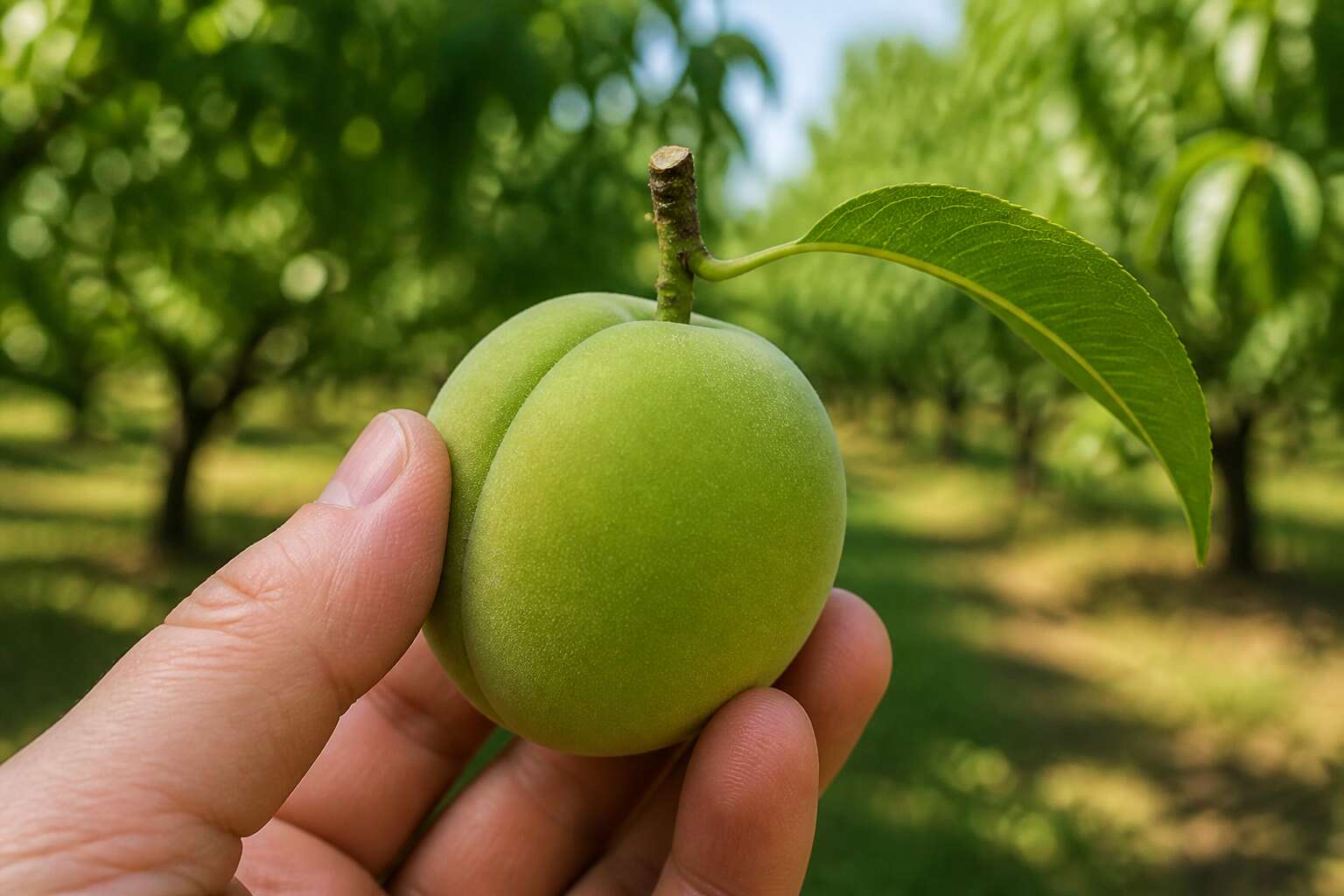
Understanding Nectarine Ripening
The Science of Fruit Ripening
Every nectarine carries a chemical signal called ethylene. This plant hormone determines whether a piece of fruit develops its full sweetness or stays locked in a rigid, sour state. We often assume that time alone solves everything, but the question of will nectarines ripen if picked green comes down to this biological trigger.
When a nectarine is harvested too early, its starch reserves have not yet converted into sugars. Ethylene production is minimal, and the fruit’s cell walls remain stiff.
The outcome depends on several conditions:
- How far along the fruit was when removed from the tree
- Whether the fruit receives external ethylene exposure
- The ambient temperature during storage
For a truly green fruit, the internal ripening machinery never activates, even under perfect conditions.
Ethylene’s Role in Nectarines
Understanding Nectarine Ripening: Ethylene’s Role in Nectarines
The question of will nectarines ripen if picked green rests on ethylene. The hormone does not simply switch on sweetness. It triggers a cascade of enzymatic activity that softens cell walls and unlocks aroma compounds. A nectarine picked too early lacks the internal processes needed to respond to that trigger.
Here is what ethylene actually does within the fruit:
- It breaks down pectin, the substance holding cells rigidly together.
- It degrades organic acids, which reduces the sharp tartness of underripe fruit.
- It stimulates the production of volatile compounds that create the characteristic nectarine fragrance.
I have seen this result. The fruit must reach a physiological threshold before harvest. Below that threshold, ethylene exposure accomplishes little. Place a green nectarine beside a banana and wait days, but the flesh stays disappointingly firm and sour! The answer to will nectarines ripen if picked green depends on when that fruit left the branch.
Climacteric vs Non-Climacteric Fruits
Nectarines are climacteric fruits, a category that continues ripening after harvest. This biological trait separates them from non-climacteric fruits such as grapes and citrus, which stop developing once detached. The distinction shapes the debate over will nectarines ripen if picked green.
Climacteric fruits follow a predictable series of post-harvest changes:
- Increased respiration rate
- Starch conversion to sugar
- Production of aromatic compounds
These changes only occur if the fruit was harvested past a certain point of maturity. When growers and home gardeners ask will nectarines ripen if picked green, the honest answer is that a fruit removed too early lacks the internal machinery to perform these steps. It might soften marginally, but it will never taste like a tree-ripened fruit.
How Nectarines Develop Sugar and Flavor
The development of sugar in a nectarine begins in the orchard, but it only finishes after picking. As a climacteric fruit, the flesh draws on stored starch reserves, converting them into sucrose, glucose, and fructose. That conversion is a delicate process. I see the question will nectarines ripen if picked green as having a nuanced answer, because a fruit harvested before starch reserves form will have little sweetness to unlock.
Flavour compounds follow a similar timeline. Volatile aromatic molecules, the agents behind that distinctive nectarine aroma, only accumulate when the fruit reaches the late maturation window. A green picked nectarine may soften, but its aroma profile remains flat.
Signs of Maturity on the Tree
Reading a nectarine on the tree takes patience and a sharp eye. I have learned to read the skin, not the calendar. The background colour shifts from green to a warm cream tone as the fruit matures, while the red blush stays a supporting signal. The flesh near the stem yields to gentle pressure, and the fruit feels heavy for its size.
- The ground colour loses every trace of green.
- The stem end softens before the tip.
- The suture line flattens slightly.
Those tree-side cues answer the question, will nectarines ripen if picked green. A fruit with hard, fully green skin has not built its starch reserves. No amount of counter time will change that. It may soften, but it will lack the sweetness you expect.
Harvesting Nectarines at the Right Time
Color and Firmness Indicators
Imagine biting into a nectarine that tastes like a sad, watery apple. That’s the risk of picking by color alone. The age old question, will nectarines ripen if picked green, has a nuanced answer. For harvest timing, look for a deep, uniform background color, not the red blush which varies by variety. Firmness is your second clue. A ripe nectarine gives slightly to gentle pressure near the stem. If it’s rock hard, it’s not ready. If it’s mushy, you’ve waited too long.
Check these indicators:
– Background color shifts from green to creamy gold.
– The stem end emits a fragrant, peachy aroma.
Trust these signs. A green nectarine picked too early lacks the natural sugar development that happens on the tree.
The Difference Between Mature and Ripe
The moment you twist a nectarine from the branch, you are making a judgment call. Maturity and ripeness are not the same condition. Maturity signals that the fruit’s internal systems can continue without the tree’s support. Ripeness means the fruit is ready to eat. The answer to the question, will nectarines ripen if picked green, depends entirely on which of those two stages the fruit has achieved.
A mature nectarine continues its sugar conversion after harvest. An immature one halts. It may soften, but it will not sweeten. That softening can mislead, texture shifts without flavor development.
To judge maturity without cutting into the fruit:
– Inspect the stem cavity for a clean break from the branch.
– Sample one fruit from the tree and wait two days before tasting it fully.
– Keep notes on harvest date and subsequent flavor across the season.
I have held beautiful nectarines that tasted like nothing. They were mature, but their flavor was arrested at that moment.
Why Some Fruits Are Picked Green
Supermarkets want nectarines that survive the truck ride, not necessarily nectarines that taste great. Fruit is picked while still hard to cope with long shipping lanes from South African orchards. So will nectarines ripen if picked green? The answer rests on timing. Picked too early, the fruit softens but the sugars never develop properly. It becomes a pleasant crunch with no flavour behind it. Commercial growers do this on purpose to meet retail deadlines:
- firm fruit tolerates cold storage better
- green fruit resists bruising
- a longer shelf life suits export schedules
That trade-off means consumers often buy nectarines that look perfect but taste flat. A fruit harvested later might not survive the journey, yet it delivers the full nectarine experience. The ripening outcome depends on how long the fruit stayed on the branch, not on the kitchen counter.
Factors Affecting Harvest Timing
A nectarine picked three days early can sit on a kitchen counter for a week and still lack the sugars that make it worth eating. That reality drives every decision in South Africa’s stone fruit orchards. Orchard managers weigh the sugar-to-acid ratio, flesh firmness, and background colour long before the pickers arrive. In the packhouse, pressure testers and refractometers confirm what the tree already knows. The answer to will nectarines ripen if picked green depends entirely on this pre-harvest window.
Consider the variables that shift that window each season:
- Ambient temperatures during the final weeks
- Soil moisture and irrigation scheduling
- The specific cultivar’s growth rate
- Night temperatures, which influence acid breakdown
Each factor moves the harvest date earlier or later. A warm spell accelerates maturity, while a cool snap stalls it. Growers must read these signals daily. Picking too soon compromises flavour permanently. Picking too late risks transit damage. In the final days, sugar accumulation and fruit softening move in opposite directions.
Can Green Nectarines Ripen Off the Tree?
South Africa’s stone fruit export trade depends on getting the picking decision right. Every season, packhouses reject fruit that looked perfect on the tree but failed to develop flavour in the box.
So will nectarines ripen if picked green? The honest answer is no. A nectarine harvested before physiological maturity will soften and change colour on your counter, but it will never gain the sugars it missed at the moment of picking. Off-tree ripening only works when the fruit has already stored enough starch and acid during those final orchard days.
- A pale, mealy texture
- Sour, flat flavour
- Almost no aroma
Mature nectarines, picked at the right time, continue ripening well. Green ones never catch up.
Methods for Ripening Green Nectarines
Room Temperature Ripening
Room temperature ripening is the default move for any green nectarine that has reached mature size. You simply leave the fruit on your counter, and within two to five days, the flesh gives to gentle pressure. The exact timeline depends on your home’s warmth, and in South Africa’s climate, that can mean quicker softening than you expect. For a more predictable result, many people use:
1. A brown paper bag.
2. A ripe banana or apple to generate ethylene.
3. A dark cupboard away from drafts.
The bag traps the gas and speeds up the softening process. But here is the reality about the question “will nectarines ripen if picked green”: ripening at room temperature can improve texture, not flavor. If the nectarine was harvested before starch converted to sugar on the tree, no amount of counter time will fix the blandness. You are essentially softening a fruit that never learned to taste like itself.
Using a Paper Bag
The brown paper bag is the standard tool for softening green nectarines. The method relies on simple physics: the fruit still produces ethylene, albeit modestly. Sealing it inside the bag concentrates that gas, creating a microclimate where softening accelerates. This answers half of the question will nectarines ripen if picked green: texture improves, but taste does not.
The bag cannot synthesize flavor compounds that never developed on the branch. You are speeding up a process, not adding chemistry. Adding an apple boosts ethylene, helping softening but not sugar content.
- Daily checks matter; an overripe nectarine turns mealy quickly.
- The bag stays closed but not airtight, preventing mold.
- Direct sunlight is avoided, since heat cooks instead of ripening.
Softer fruit emerges in two days, yet flavor remains what it was at harvest. That answers will nectarines ripen if picked green. The bag softens the flesh, never the flavor.
Cold Storage and Ripening
Cold storage offers a different answer to the question will nectarines ripen if picked green. Low temperature does not halt the fruit entirely. It slows ethylene production, keeping the nectarine in a quiet state until warmth wakes it again.
This is how commercial growers manage large harvests. They pick fruit while firm, store it cold, then bring out small batches to soften on demand. A home refrigerator can do the same.
- Wrap each nectarine loosely in paper to prevent moisture loss.
- Place them in the crisper drawer, away from other produce.
- Keep them there for up to three days, then move them to the counter.
Cold storage stretches your window. The flesh will soften later, but the flavor remains fixed at whatever stage it reached on the branch.
Checking Ripeness Daily
Once green nectarines leave the cold shelf, they expect a daily inspection. The countertop treatment works, but only if you give each fruit a polite squeeze every morning. This is where most people fail. They expect ripening to be steady. It is not.
The answer to will nectarines ripen if picked green often lives at the stem. Check for the subtle give there, not the blush on the skin. By the time the skin darkens, the interior may already be past its moment.
Here is what to look for each day:
- A gentle press near the stem should yield slightly.
- The fruit should emit a sweet perfume near the blossom end.
- The background color should shift from pale to golden.
Some fruits never move. If a nectarine stays hard after five days, it was picked too early. Accept the loss.
How Long Does It Take?
For those who ask will nectarines ripen if picked green, the answer depends on method as much as patience. A green nectarine on a Johannesburg counter can take anywhere from three to seven days, but only if you treat it kindly.
The paper bag is the old reliable, though a plain bowl works too, if slightly slower. Check daily, as we have covered. For a more structured approach, try this sequence:
1. Keep the fruit at room temperature, between 18 and 24°C.
2. Place it beside a banana or apple, not on top of them.
3. Turn it each morning to avoid soft spots.
Expect a hard fruit to soften within four days, on average. Some stubborn ones resist, and that is simply their nature.
The Impact of Early Harvesting on Flavor and Texture
Starch Conversion and Sugar Content
Picking a nectarine before its time produces bland fruit. The flesh stays hard, the aroma barely registers, and the sugars that should have developed remain trapped as starch. This raises the central question: will nectarines ripen if picked green? Sometimes they will, but the result rarely matches tree ripened fruit.
Starch conversion is the key process. In a mature nectarine, enzymes break starch down into sucrose, glucose, and fructose after harvest. That process softens the flesh and builds sweetness. In my experience, immature fruit lacks the enzyme activity needed for proper conversion.
Here is what early picking does to texture and flavour:
- The flesh often becomes mealy rather than juicy.
- The sugar content plateaus far below optimal levels.
- The characteristic nectarine aroma never fully develops.
A green nectarine may soften on the counter, but the starch remains unaltered without those enzymes.
Texture Issues in Prematurely Picked Fruit
Ninety percent of a nectarine’s flavour profile is decided in the final week on the branch. Picking early to beat the birds or the weather might seem pragmatic, but the texture pays the price. A prematurely harvested fruit often turns into a crisp disappointment. The flesh lacks the cellular breakdown that creates that coveted melt-in-your-mouth quality.
Here is the reality of what early picking does to the fruit’s structure:
– The flesh remains crunchy, similar to an apple, but without the satisfying snap.
– Cell walls stay rigid, preventing the juicy breakdown we associate with ripe fruit.
– The skin becomes tough and chewy, while the inner flesh turns mealy and dry.
– A soft exterior can develop, but the core stays hard and unpalatable.
The water content also suffers. A tree ripened nectarine holds a precise balance of acids and sugars. A green picked fruit holds more acid and less sugar, which amplifies the sourness. When you bite into one, you get a starchy paste rather than a burst of nectar. It is a botanical identity crisis. The fruit looks like a nectarine, but it tastes like a sad potato.
So, will nectarines ripen if picked green? They will change colour and soften, but they cannot manufacture the complex flavour compounds they missed out on. The ripening process is not magic; it is chemistry. Without the parent tree supplying the final nutrients, the fruit stalls. The exception is a fruit picked at the “mature” stage, just before full ripeness. That fruit has enough stored energy to finish the job. A truly green fruit, one that is still hard and fully green, has no chance. It will sit on your counter, slowly shrivelling into a bland, mealy husk.
Nutritional Differences
Picking a nectarine early changes more than taste. The nutritional profile shifts noticeably. A green fruit carries higher starch and lower sugar. It also holds less vitamin C and fewer antioxidants. These compounds build during the final days on the tree. Pull the fruit too soon, and you lock in those deficits.
The specific losses are measurable:
- Lower vitamin C content
- Reduced antioxidant activity
- Higher starch ratios, lower sugar
Flavour suffers for the same reason. The complex esters that give nectarines their aroma never form. You get a faint, sour imitation of the real thing. So, will nectarines ripen if picked green? They will soften, but they will not recover the lost nutrients or flavour. The tree is the only source of that final chemical finish!
Comparative Taste Tests
Comparative taste tests settle the question of will nectarines ripen if picked green with brutal efficiency. Set a green-picked fruit beside a tree ripened one and the differences appear within seconds. The green-picked nectarine softens on the counter, but it never develops juice. Its flesh turns mealy and dry. The flavour flattens into a single dull sweetness with a sharp sour edge. Tree ripened nectarines carry floral, honeyed notes that tasters pick out instantly. In blind panels, participants describe the green-picked sample as ‘sweet but empty.’ Some cannot believe both fruits are the same variety.
The off tree ripening process only breaks down starches. It cannot manufacture the complex esters responsible for nectarine aroma. So yes, will nectarines ripen if picked green? Technically the fruit softens. The flavour and texture never catch up.
Tips for Improving Flavor
The harvest knife waits for no fruit. Drawn early, the nectarine leaves the branch with its interior architecture already condemned. The question of will nectarines ripen if picked green deserves a sombre reply. It will soften. It will yield under pressure. But softening is not ripening, and the counterfeit process cannot summon the volatile compounds that carry nectarine aroma and honeyed notes.
What remains salvageable is sugar alone. Starch converts slowly, day by day, and the fruit grows sweeter while its texture surrenders to a dry graininess. No warmth can rebuild what the branch abandoned. The flavour never deepens past that single flat sweetness. The honest answer carries a warning: the flesh forgives, but taste does not.
Salvaging and Using Under-Ripe Nectarines
Culinary Uses for Firm Fruit
The grocery store conundrum. You buy nectarines that look perfect, yet they snap like a twig when bitten. While the question of will nectarines ripen if picked green often leads to disappointment at the fruit bowl, there is a silver lining for those firm specimens. Instead of forcing them into a state they will never gracefully achieve, pivot your culinary strategy to embrace their natural texture.
Firm nectarines possess a pleasing crunch and a tart, almost vegetal note that many appreciate. I have found that cooking transforms their dense flesh into a delightful component for savory dishes. The dry heat of a grill or a hot pan caramelizes their natural sugars while retaining a slight bite. Consider these applications for unyielding fruit:
– Diced finely and folded into a fresh salsa with red onion and coriander to cut rich meats.
– Sliced thinly and used as a textural layer in a hearty sandwich or grilled cheese.
– Poached gently in a light syrup with star anise and cinnamon for a simple dessert.
Their high pectin content makes them ideal for jams and preserves, where the need for setting agents is reduced. You will achieve a superior chutney with chunks that retain their shape through long cooking, rather than dissolving into mush. This approach transforms a perceived failure into a kitchen success, proving that firm fruit has a valuable place on the pantry shelf. Ultimately, the decision rests on what you plan to make tonight.
Baking and Grilling Ideas
The question of will nectarines ripen if picked green often ends with disappointment at the fruit bowl. A hot oven and a roaring braai are far more forgiving. I have rescued whole batches of stubborn fruit by roasting them whole with a knob of butter and a splash of sherry.
Grilling works beautifully too. Halve the nectarines, remove the stone, and lay them cut side down on the grid over high heat. The intense heat blisters the skin and softens the flesh without turning it to mush.
- Brush the halves with a little oil before grilling to prevent sticking.
- Serve the charred fruit with a dollop of thick cream and crushed ginger.
- For baking, fold lightly spiced chunks into a simple batter, where they hold their structure and release juice pockets.
Making Sauces or Chutneys
Will nectarines ripen if picked green? Sometimes the answer arrives too late. The fruit sits in your basket, stubborn and pale. Yet there is a quiet redemption in the saucepan. Under-ripe nectarines possess a tartness that ripened fruit loses, an acidity that makes them ideal for chutneys and sauces.
The flesh holds its shape during slow cooking, releasing pectin that helps the preserve set naturally. Simmer chopped fruit with vinegar, brown sugar, and spices:
- coriander seed for a warm citrus note
- dried chillies for heat
- black mustard seed for texture
The result is a dark, complex condiment. For a simpler sauce, cook the fruit with butter and stock until it collapses, then blend until smooth. A splash of vinegar brightens the finish. This sauce carries a sharpness that ripened fruit cannot offer.
Storage Recommendations
Every season, a basket of green nectarines sits on the counter, and the question will nectarines ripen if picked green surfaces with a pang of regret. Sometimes the answer is no. The fruit stays stubborn, pale, and hard. I see this as a salvage operation, not a loss, and storage begins it.
Refrigerate the under-ripe fruit in the crisper drawer. Cold air arrests the slow decline, holding that sharp acidity and firm texture for up to two weeks. For longer, slice the flesh and freeze it on a baking sheet. Once solid, transfer the pieces to airtight bags. Months later, they still hold their shape for the saucepan.
Keep green nectarines away from ethylene producers like bananas and apples. Those gases encourage uneven softening. If preserves are the goal, portion the fruit before freezing. Three rules govern this storage:
- Unwashed fruit in a perforated bag keeps moisture balanced.
- Single batch portions in the freezer suit sauces and chutneys.
- Labels with dates and intended recipes prevent forgotten bags.
This practice does not answer will nectarines ripen if picked green, but it renders the question moot. The fruit becomes a provision rather than a problem.
When to Discard
Salvaging under-ripe nectarines begins with an honest cut. Slice one open and examine the flesh near the stone. A mealy, translucent core will not improve. The fruit has passed its moment of salvage. Discard it. A bitter almond aroma rising from the pit signals breakdown, not potential.
The question, will nectarines ripen if picked green, is answered fruit by fruit. The salvageable nectarine yields slowly at the shoulder and keeps its acid bite when sliced. The unsalvageable one stays wooden for a week, then wrinkles and ferments.
Look for these signs before committing to a recipe:
– Mold at the stem end.
– Dark, sunken spots that weep moisture.
– A hollow sound when tapped.
– Flesh that springs back fully after pressure.
These fruits belong in the compost. Only fruit showing a softening seam, a faint perfume, or a hint of yellow beneath the green will serve.



0 Comments